1931-1970
1931-1970
The 1930's and early 1940's were difficult years for the Boise District, as they were for everyone. The great depression created a multitude of problems, and as they were faced and solved, expansion of programs had to wait. Maintenance of existing programs was foremost in the minds of educators.
The curricular program continued to stress the basic skills in language arts, science, math and social studies, as well as offering programs in areas such as art, music, world languages, home economics, industrial arts and secretarial science. One important addition to the curriculum during this time was the beginning of speech correction classes at Lowell School in 1934. Half-time classes were also offered at Lincoln, "Opportunity School." The following year speech correction classes were added to the high school.
Perhaps one of the most important changes during the 1930's was the change from an 8-4 graded school system to a 6-3-3 graded system. The first junior high, now North, was built in 1936-37 on 13th Street for a cost of $308,351. It opened in September of 1937 and housed grades 7, 8 and 9. By the end of that year it had an enrollment of 1,378 students. The junior high concept was formally organized in 1939.
In addition to the building of North Junior High, an addition was built at Whitney in 1936 for a cost of $22,506. The Boise High gymnasium was also constructed in 1936. The cost for this building was $122,118.
Conditions remained much the same during the war years. During 1940-43 the school enrollment remained quite stable. During the 1940-41 school year the enrollment was 6,217. The following year enrollment was at 6,202 and in 1942-43 it was 6,254.
Students and faculty members participated in the war effort. Many joined the armed forces. Others worked in Civil Defense activities, War Bond drives, and assisted the Red Cross.
An important program was established in 1940. At that time the Boise District joined with the City of Boise to provide a summer recreation program for children. The program was (and continues to be) recognized nationally. It serves thousands of children every summer.
Beginning with the 1943-44 school year, the District began to grow. Enrollment for that year was almost 700 students higher than the previous year. Although the 1944-45 enrollment was less (6,881 compared to 6,906 for 1943-44), the following years continued to increase significantly. Enrollment figures for the 1949-50 school year indicate that 8,990 students were attending the Boise schools.
Part of the large increase in enrollment was due to the fact that rural districts were annexed to the Boise District during the late 1940's. In September, 1940, the Pierce Park District, formerly known as Common District No. 18, voted to consolidate with Boise. The Boise District retained the original school, which had been built in 1911, and added to it in 1949 and again in 1950.
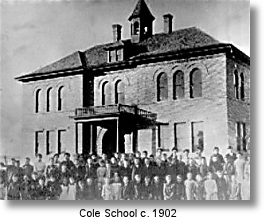
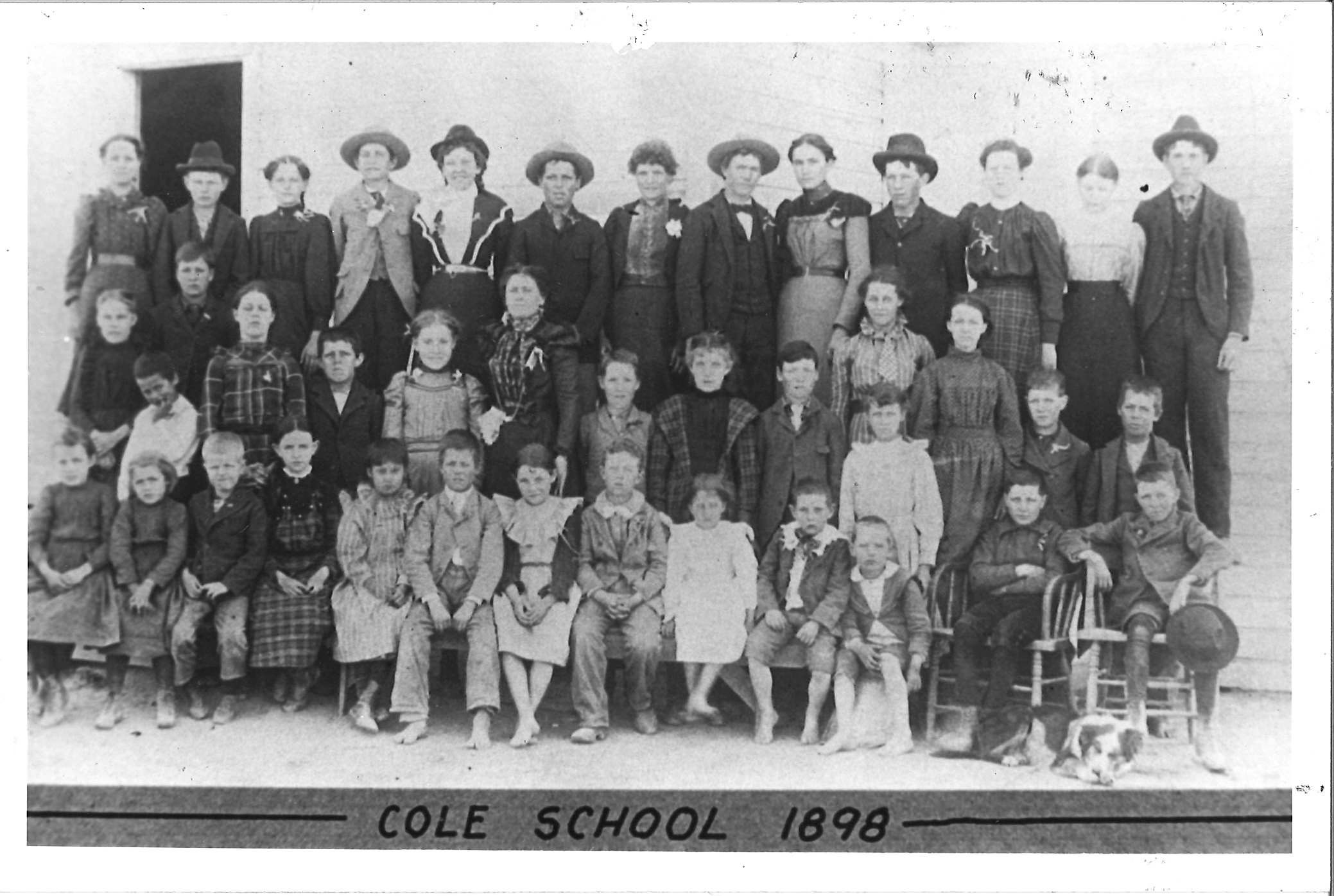
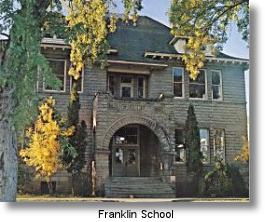
In December, 1947, the Fairmont District approved annexation to the Boise District. This district had been formed in 1946 by the Franklin District and the Cole District, and included a junior high program at Cole and a high school program, which was housed in the Franklin School, in addition to the elementary program at both schools. The Idaho Statesman stated that the Fairmont District comprised an area ". . . half the size of Boise."
Two more districts annexed in 1949. The Holcomb District, which adjoined the Garfield District, annexed May 14, 1949. It was followed by the Maple Grove District on May 18th.
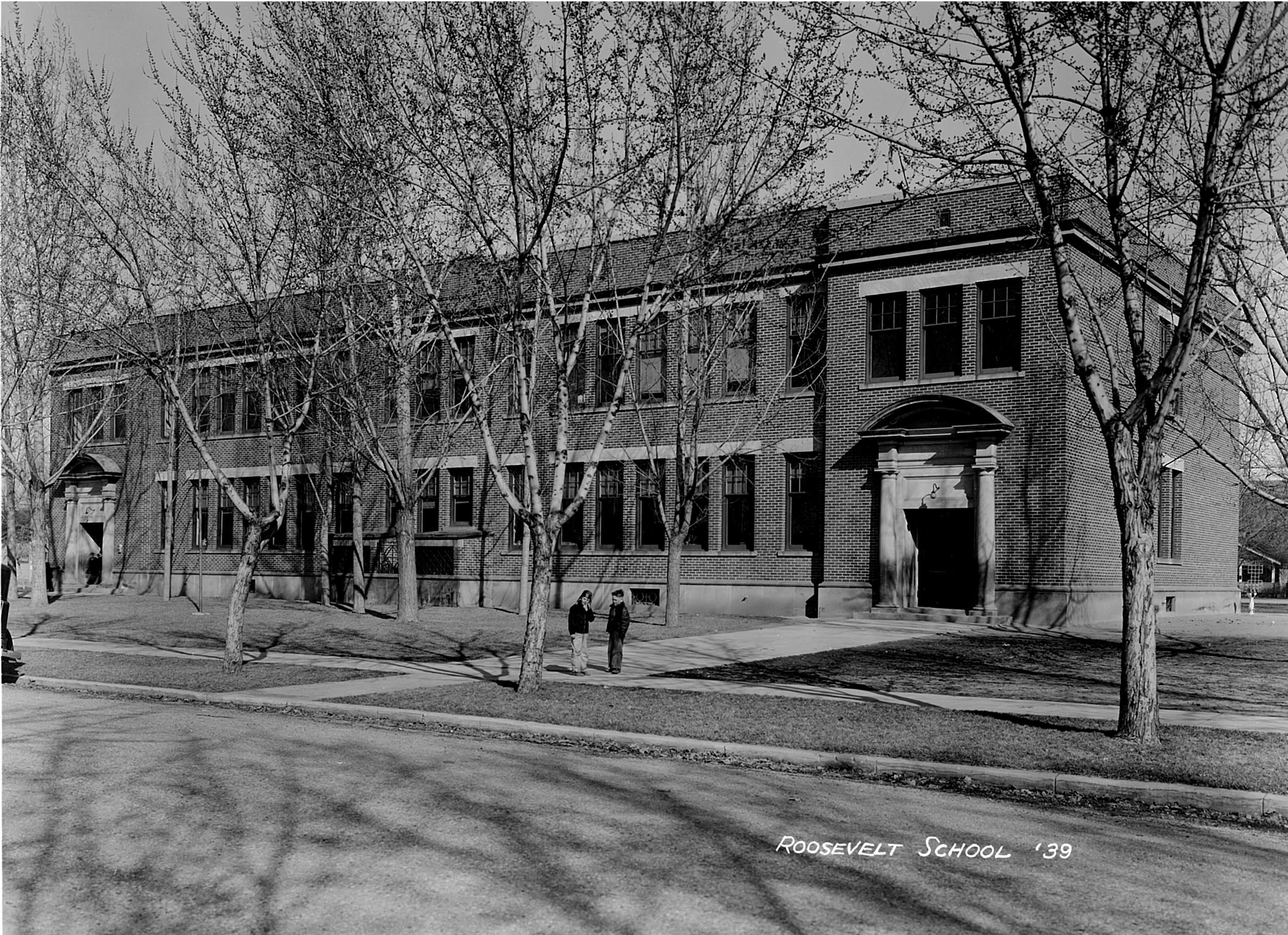
The tremendous enrollment growth created a need for new school buildings, and the late 1940's saw the beginning of a large scale building program. The District's second junior high, South, was built in 1947-48. Jefferson, Lincoln and Whittier Elementary Schools were built in 1949. Additions to Whitney, Pierce Park, Garfield, Roosevelt and Washington were also constructed in 1949, as was an addition to the new junior high, South.
During the 1951-1960 period the tremendous growth continued. The District reached an enrollment of 10,000 during the 1951-1952 school year. By 1959-1960 the enrollment had almost doubled, having reached 18,289.
The high school population severely strained the one existing high school in the 1950's. Tenth grade students attended the junior highs for several years, in an effort to alleviate the crowding. The construction of Borah High School in 1958 resulted in the tenth grade students returning to the high schools.
The Orchard School voted to annex to Boise in 1950, and the Valley View School District voted in favor of annexation to Boise in October, 1951. These were the last annexations to the Boise District.
The building program, which began in the late 1940's continued in full force. New schools were constructed and additions were built onto existing schools. Hawthorne and McKinley were built in 1951, followed by the construction of one elementary school each year during the five year period of 1952-1956: 1952 Madison, 1953 Campus, 1954 Monroe, 1955 Adams, and 1956 Koelsch. Two additional junior highs, East and West, were constructed in 1952. After a one year break, construction began again. Hillcrest and Mountain View Elementary Schools and Borah High School were built in 1958, followed by Highlands, Jackson, Taft and Hillside Junior High in 1960.
Existing buildings were enlarged in order to accommodate the large number of students. Even new buildings were quickly outgrown and had to be enlarged. A second addition to Pierce Park was constructed in 1951, as was a second addition to Roosevelt. Jefferson, constructed in 1949, received a $90,681 addition in 1953. Within four years from the original date of construction (1951) McKinley had to be enlarged by five classrooms. Monroe received four more rooms in 1957, only three years after its original construction. Hawthorne and Koelsch also required additions in 1958. One year after Hillcrest's construction in 1958, more rooms were added to accommodate the influx of students. In 1960, additions were constructed at Mountain View, Lincoln, Borah and Boise.
Curriculum in Boise during 1951-1960 was affected by national activities and achievements. No drastic changes were made, but increased emphasis was placed on world languages, math and the sciences. The traditional basic skills continued to be important. This period actually began to set the stage for the changes in the late 1960's and 1970's. Special education received renewed emphasis as well. In 1950 a full time speech therapist began offering services to eligible students. In 1953 a program was established at Franklin School to teach special needs children. At that time, parents worked as aides in the classroom, and provided transportation to school for some of the children. Eight years later a second classroom for older special needs children was begun.
The building continued in the 60's, but at a scaled down pace. A 14-room addition was built onto Hawthorne in 1961. In 1964 the third high school was built in west Boise and was named Capital. The following year an auditorium was added to Adams School. In 1968 the building program was rounded out by the building of Owyhee, Valley View and Maple Grove.
Curricular changes in the 1960's responded to needs of Boise students. Courses in remedial math and science were expanded as were college level courses in math and science. The physical education program and reading program were expanded, as were some elements of the social science program. Perhaps the biggest curricular change during this period was the development of the American Humanities program in the late 1960's. In addition to continued emphasis on math, science and world languages courses, there was a questioning of the content and goal of each program.
Special education began a large scale expansion at this time. Lincoln expanded its program in 1962 so that special education students from grades 1 through 12 could receive an appropriate education. In 1964 special education classes were added to Roosevelt's elementary program. For the next five years, special education programs were added in seven elementary schools: Central (1965), Whittier (1966), Taft (1967), Collister (1968), Monroe (1970), Hawthorne (1970) and Garfield (1970).